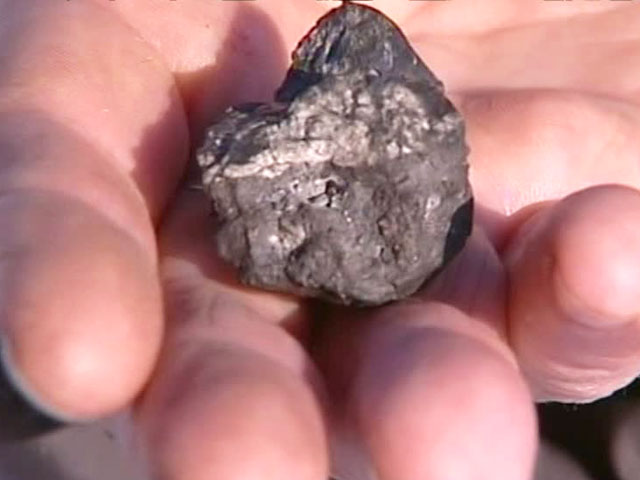
"Gold Rush" begins for Fragments of Russian Meteorite 2
In [meteorite-list] "Gold Rush" begins for Fragments of Russian Meteorite at:
http://www.mail-archive.com/meteorite-list@meteoritecentral.com/msg110943.html
I wrote,
“Chelyabinsk decided to keep the money in meteorites
Konstantin Panyushkin, February 17, 2013,
http://www.vesti.ru/doc.html?id=1034744&cid=7
http://cdn1.vesti.ru/p/o_740865.jpg “
A rough translation done of the video at
http://www.vesti.ru/only_video.html?vid=486926
was done for me.
From the notes that I took while she translated for me,
the first part of the video is about schools and hospitals
getting their windows repaired and opening tomorrow.
It was followed by a segment about first responders
being taught to cut glass and repair windows.
The next segment is about inhabitants in a village
finding what they believe to me meteorites. The general
gist of the segment is that they believe the stones
came from space. They first noticed distinct holes in the
snow around their village. When they dug up the holes,
they found “pieces of metal” of various shapes and stones
which they had not seen before within the area of the
village. The kids said that they had found 6 or 7 stones
the size of fingernail and one large stone. The segment
states that they have decided to keep the “money in
their stones” and wait to sell their stones when they
can get the best money for them. It was stated that
they will hide their stones from strangers until real buyers
come as they heard on the internet that the stones are
worth real money. Also, they will not think of showing
their stones to scientists.
One of the kids said that his grandfather told him
not to keep the stones at home and not to touch them
with his bare hands. My translator told me that the
grandfather is likely thinking about the Kyshtym
explosion that occurred on Sept. 29, 1957. In this
explosion, a waste tank at the Mayak nuclear weapons
plant, Chelyabinsk region, exploded and contaminated
an area of 15,000 to 20,000 square kilometers with
radioactivity. As a result, the older Russians in the
region are suspicious of massive explosions of any
kind.
Kyshtym disaster
http://en.wikipedia.org/wiki/Kyshtym_disaster
http://en.wikipedia.org/wiki/Mayak#Kyshtym_disaster
http://en.wikipedia.org/wiki/File:Ostural-Spur.png
Yours,
Paul H.